Systemic organisational development
Holistic corporate development through an accompanied transformation processes
We at ESBC are not traditional management consultants. We don’t use ready-made, formulaic concepts. Rather, our approach is that the solution is already in your company. With appropriate corporate support and proven methods, we bring it to fruition.
This is one of the reasons why systemic organisational development is so much about people. Only when they feel comfortable with the change can a sustainable change process be realised: The people must reach the level of maturity to be able to support the transformation. In the spirit of salutogenic leadership, people’s well-being and performance pay off for all corporate goals.
In summary: Only when human needs are linked with business needs can holistic corporate development be achieved.
This approach becomes particularly relevant when introducing AI to organisations. AI transformations are not pure technology projects; they are cultural and structural changes. Roles shift, decision-making processes are rethought, competencies need to be redefined. Our guiding principle: Human in the Loop.
People should shape AI, not be shaped by it.
Why systemic organisational consulting makes sense
The environment is constantly changing for companies, which is why a strategic evaluation is important every year:
- Do the goals still fit the change?
- What needs to be changed in order to continue to be successful?
The arrival of AI raises questions for organisations that go far beyond technology: Which roles are changing and how are the affected employees brought along? Where does AI provide relief, where does it replace or overwhelm? Which decisions may machines make, which must remain with humans? These questions are rarely technical. They touch on culture, leadership and collaboration — precisely those topics we accompany systemically. We bring our own AI practice to this work, from our own consulting as well as from client projects in which we have seen AI systems in action. This gives us a realistic view of what is possible and what is not.
Through structured interviews, mindset work, coaching and workshop support, we first determine what potential lies dormant in the company. Based on this, ESBC creates a concept that shows what your transformation requires. This does not mean that a fixed concept is presented, but that it is developed individually with you and your employees. Through the hands-on mentality of the facilitators, the implementation starts directly. The output of organisational development (OD) is then a roadmap of topics that will accompany you for the next few years and promote the success of your company.
Like a tree that needs constant care in order to produce a sustainable yield, we see ourselves as a growth aid from the outside. We use open interviews to question the current culture, concepts and processes. Emotional statements also have room to support people in their development. Only when your employees understand the sense of purpose can there be a jointly supported implementation and long-term change.
ESBC initiates a process of organisational development that is supported by the staff even after the departure of the OD facilitators.
Human in the Loop — our approach to AI transformation
In most companies, AI adoption is not a technology issue, but a cultural one. The tools are available, the question is: How do people work with them? Where does decision-making authority remain, where is it given up? How does leadership change when machines think along?
We support organisations in shaping these questions consciously. Our guiding principle: Human in the Loop. People remain involved where judgement, responsibility and relationship matter. AI provides relief, but does not replace what makes us human.
Our credibility: We use AI in our own consulting work and have seen in client projects what works and what does not. This practice flows into our support. However, our focus is deliberately not on technical implementation, but onthe people and processes that should carry AI.
Typical formats in our work:
- Workshops for leadership teams on roles and decision-making authority in AI use
- Support for AI adoption projects from a culture and process perspective
- Team reflections on changing ways of working with AI
- Coaching for leaders and employees in dealing with AI
Our methods of corporate development
Entrepreneurial change processes that involve people
FIRST STEP
Strategic potential development
With the help of coaching-oriented briefing discussions, ESBC determines which levers and potential exist in your company for positive change. The solution develops from within the system and is not imposed from outside.
In this phase, no fixed concepts are used, but a tailored support process is developed that responds to the values and needs of your company.
Particularly in AI transformations, this systemic view helps distinguish real potential from hype, find the right rhythm for the organisation, and involve people where their judgement remains decisive.
SECOND STEP
Individual support
A jointly developed process plan is an initial direction in which the company wants to move. This is continuously fine-tuned in order to question whether the measures are still contributing to the goal.
During implementation, the perspectives of culture (how something is done) vs. process (what is done) are constantly taken into account. The systemic view combines human needs with business requirements.
THIRD STEP
Sustainable development
At ESBC, we are not interested in making you dependent on an external service. On the contrary, people are empowered internally to carry the ongoing process themselves and to realise sustainable, agile organisational development even after the departure of the corporate facilitators.
We constantly ask ourselves: Is there still a need for us? Are we the right people to accompany you? It is important to us to develop long-term partnerships at eye level.
„We know what people need for change, but not where they want to go. You decide that.“
ESBC is your companion for organisational development
Change management with entrepreneurial and human aspects

Value-free and neutral attitude
Our job is to seek out your internal potential and help it unfold. We embrace diversity and do not believe we know your solution in advance.

Achieving goals with enthusiasm
When we accept an assignment, it is only when we are fired up about your company and your problem. Our enthusiasm is palpable.

Shaping relationships
We value constant cooperation and a friendly relationship. We strive to build and maintain long-term relationships.

AI transformation with Human in the Loop
We support companies in introducing AI with a focus on people, culture and processes. With our own AI practice in the background, but a clear distinction from technical implementation. We make sure people stay in the loop where judgement, responsibility and relationship matter.
Our systemic coaches for OD
Select your own team of experts to accompany you through the process

Barbara Schaumüller
Facilitator in Organizational Development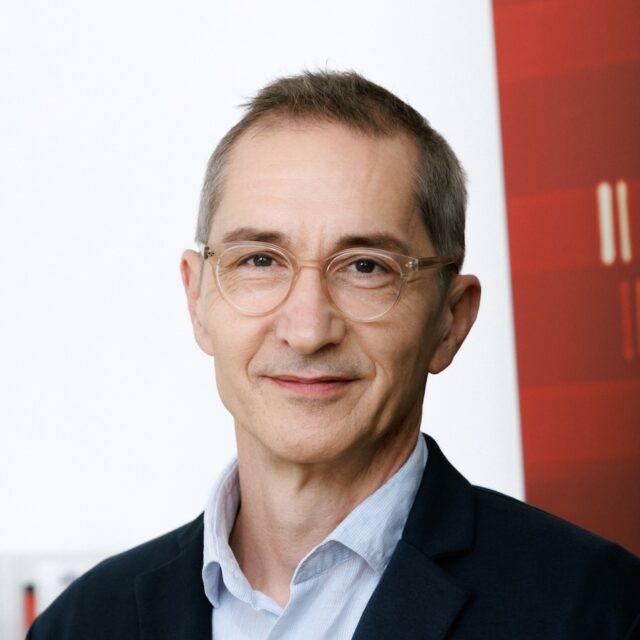
Udo Bräu
Systemic Organizational Facilitator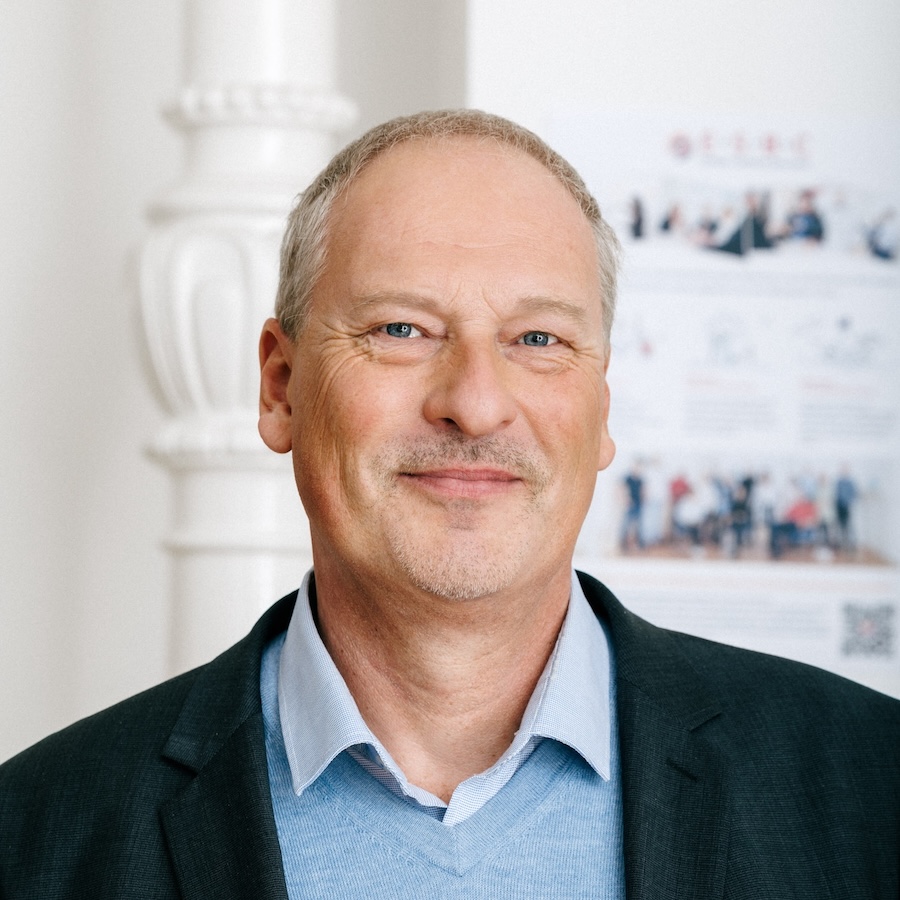
Michael Tomaschek
Organizational Developer